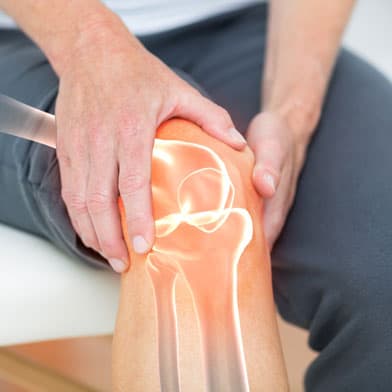
Knee replacements are typically considered to be successful procedures, with a high rate of patient satisfaction.
Although uncommon, complications can develop in approximately 1 out of 20 cases.
However, most are minor and treated effectively. Some examples of complications include:
Wound Infection
Infections can occur at the incision site or deep within the knee joint after knee surgery.
These are treated with antibiotics, although in some cases, surgery may be necessary to remove the infected tissue.
Deep Vein Thrombosis
This is a blood clot that forms in the leg and can be dangerous if it breaks free and travels to the lungs (pulmonary embolism).
Deep vein thrombosis is treated with blood thinners.
Special support stockings, exercise, and anticoagulant medicines can also help eliminate post-operative blood clots.
Excess bone and scar tissue
Sometimes, the bone around the implant does not heal properly, or scar tissue forms that limit joint movement.
Further revision surgery may be needed in these cases to restore mobility and function.
Allergic reactions
Some patients experience allergic reactions to the bone cement used with knee replacement devices, which can cause difficulty breathing, chest pain, and low blood pressure.
This is a medical emergency that requires immediate treatment.
Dislocation
Sometimes the knee replacement device can become dislocated or move out of place.
This is usually treated with physical therapy and exercises to help strengthen the muscles around the joint.